Publications
Featured Publications
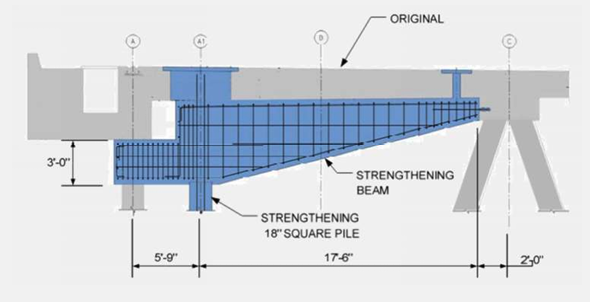
Port Infrastructure Modernization
Common reasons ports need to modernize, and the upgrades required for wharves, cranes, yards, and power systems
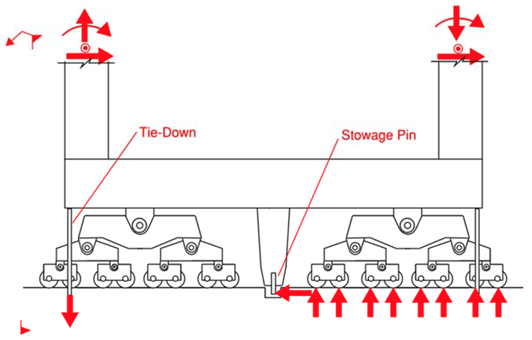
STS Crane Stowage Design: Key Considerations and Case Study
What wharf and crane designers need to understand about stowage systems, with a case study from Port Everglades

Balance Crane STS Design Now Available from ZPMC
A detailed prototype design for a ship-to-shore crane that reduces wheel and tie-down loads
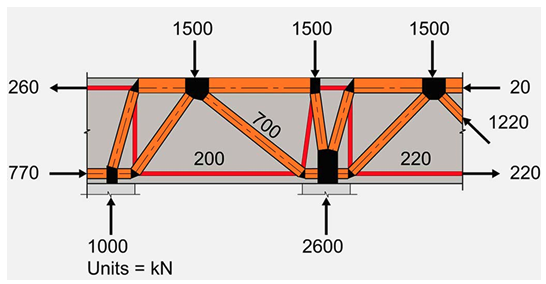
Justify Larger Wheel Load Capacity
Methods and case studies for justifying additional crane rail girder capacity without expensive upgrades
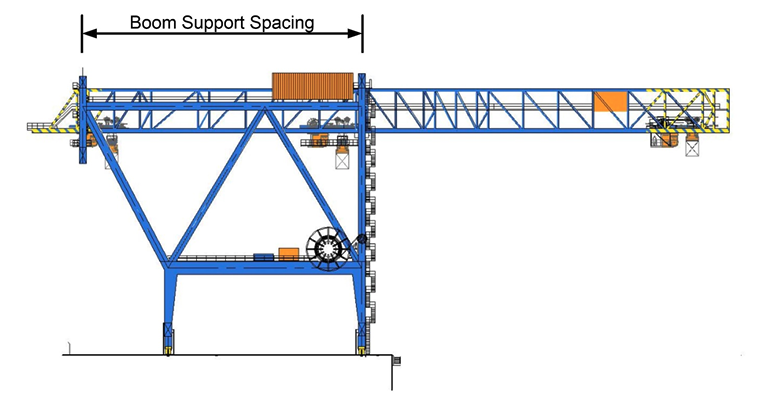
Key Design Issues for Large Low Profile Container Cranes
Design issues and solutions for the latest generation of low-profile cranes serving ultra-large container vessels
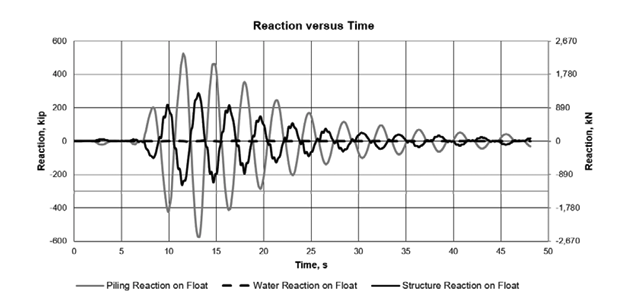
Seismic Response of Large Pile Moored Floating Structures
Analyses showing why seismic evaluation of pile moored floats is recommended in high seismic regions
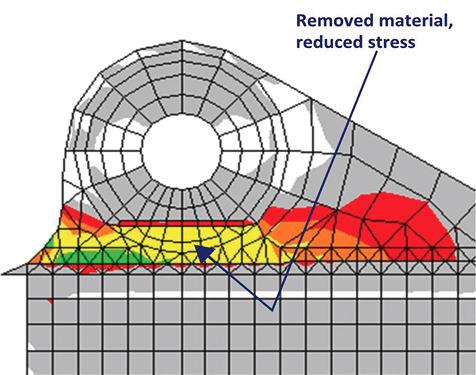
Crane Structural Maintenance
Lessons from five decades of helping clients manage fatigue and fracture in cyclically loaded cranes

Crane Loads—Triple E Class and Beyond
How growing ship sizes and future crane designs affect crane wheel loads, and what new wharves should be designed for
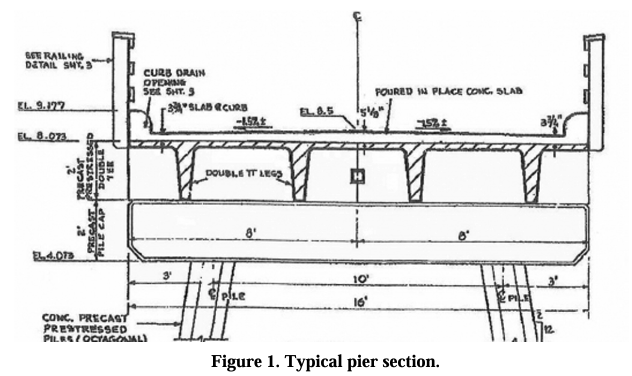
Innovative Wharf Details: Elastomeric Bearing Pile-Deck Connection and Finned Monopile
A pile-deck connection that improves seismic performance, and a finned monopile design that allows shorter, smaller-diameter piles
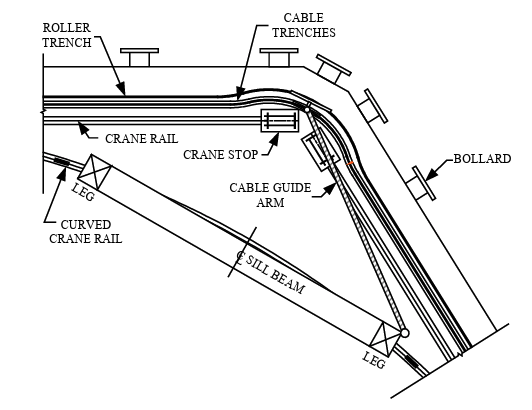
Transferring Container Cranes Around Corners Using Curved Rails – Design Considerations
A comparison of crane transfer methods, and the many design options curved rails present for owners
Publication Archive
Crane Innovations - The Past, The Present, The Future
Provides an overview of past, present, and future crane innovations and smart equipment technologies.
This presentation provides an overview of past, present, and future crane innovations.
Low Profile Cranes, An Introduction
Provides an overview of the structural, mechanical, and electrical considerations for low profile cranes.
This presentation provides an overview and the structural, mechanical, and electrical considerations of low profile cranes.
PED Crane and Infrastructure Upgrade Project: Overview and Lessons Learned
Overview of the Port Everglades low profile crane project, detailing crane and girder systems, design/construction issues, and key lessons learned.
This presentation provides an overview of a recently completed low profile crane project at Port Everglades involving procurement of three of the largest low profile cranes in the world and installation of a new crane rail girder system to support these cranes. The presentation describes an overview of the project including crane and girder systems, design and construction issues encountered, and key lessons learned.
San Francisco Floating Fire Station 35: Overview and Lessons Learned
Discusses design considerations and lessons learned from the San Francisco Fire Department's floating fire station, applicable to typical projects.
The San Francisco Fire Department acquired a new floating fire station at Pier 22 ½ for their fireboat fleet. The floating station design is unique, having a steel float with an attached building that houses personnel at the station full time, accommodates sea-level rise, and is designed as an essential facility with a 50-year design life. This presentation discusses that even though this project was unusual, many of the items to consider and lessons learned can be applied to improve designs on more typical projects, such as ferry terminals.
Liftech Develops New Hoist System for STS Cranes
Details a new STS hoist system using large diameter, low speed, high torque segment motors, eliminating gearboxes to reduce maintenance and improve efficiency.
Contributors: Gerhard Fischer, Siemens; Matt Plante, Virginia International Terminals; Andreas Dieges, Siemens; Gong Zhenqing, ZPMC; Michael Scheidt, Sibre; Patrick McCarthy and Nick Grebe, Liftech.
Liftech developed a new STS hoist system design that provides the same functionality as existing systems but without a gearbox, high speed brake and coupling, snag protection, and depending on the configuration, trim-lift-skew system. The design uses large diameter, low speed, high torque, Siemens electric motors, without a gearbox, to turn the drum. The segment torque motors are an existing technology proven in manufacturing industries. The initial cost varies by configuration but in the simplest configuration is expected to be 10% less than traditional hoist systems. The design reduces maintenance and improves energy efficiency.
In Situ Boom Extension Process
A containerized rig and procedure that extends ship-to-shore crane booms without a land-based or floating crane
Container ships are getting larger, and many existing ship-to-shore cranes need increased lift height and boom outreach to service them. But extending the outreach by more than a small amount is not easy, and it often requires floating cranes or large shore-based cranes that impact wharf operations. In this paper, Kenton Lee introduces a concept rig and procedure Liftech developed to extend a container crane boom up to approximately 8 meters, without a land-based or floating crane and without removing the boom.
Wharf Upgrade Considerations for Large Low Profile Cranes
Presents infrastructure considerations for large low-profile cranes, including girder capacities, electrical demands, and phased construction at Port Everglades.
This publication presents key considerations for the infrastructure supporting large low profile cranes, including large crane girder and pile capacities, electrical demands, and construction challenges associated with the project, such as phased construction and daily coordination to avoid interruptions to the operations. The focus is on the Port Everglades Department of Broward County new crane girder and wharf upgrade project, which covers about 1 mi (1.6 km) of waterfront.
Seawall Movement and Piling Design at the San Francisco Waterfront
Discusses methods, findings, challenges, and future suggestions for the design of the San Francisco Fire Department’s floating fire station.
This publication discusses methods and findings for the San Francisco Fire Department’s floating fire station, including challenges encountered and suggestions for future projects.
Practical Observations for Rail Mounted Crane Interfaces
Provides commentary and practical guidance on design and coordination of civil infrastructure for rail-mounted cranes to reduce installation costs.
PEMA explains, “This Information Paper provides commentary and practical guidance about issues related to design and design coordination of civil infrastructure for rail mounted cranes. It does not provide guidance about quality assurance during construction. The Paper’s goal is to help reduce challenges and costs during installation and operation of rail mounted cranes.”
Concept High Productivity STS Cranes
Covers recent and concept crane systems designed to address the growing demand for increased crane productivity.
This presentation covers recent crane systems and concept crane systems that address the demand for increased crane productivity.
A Better Crane Tie-down Design
Discusses a new tie-down link concept designed for the next generation of container cranes.
This article discusses a new tie-down link concept for the next generation container cranes.
Fatigue Cracks on Container Cranes
Highlights the danger of fatigue cracks on container cranes and provides practical advice for locating these cracks in a PEMA information paper.
Liftech is the pioneer of structural maintenance programs for container cranes and has been advocating the importance of performing structural maintenance for decades. Simo Hoite and Mike Jordan of Liftech Consultants Inc. worked with other Port Equipment Manufacturers Association (PEMA) members to develop a new PEMA information paper on the structural examination of container handling cranes. Published February 10, 2016, the paper highlights the danger of fatigue cracks on container cranes and provides practical advice for locating these cracks.
New Concepts for Future Wheel Equalization System, Part 2
Part 2 of the explanation behind the future wheel equalization system for container cranes.
In this article, Mike Jordan and Erik Soderberg explain the thinking behind the future wheel equalization system, Part 2.
New Concepts for Future Wheel Equalization System
Explains the engineering rationale behind the future wheel equalization system for container cranes.
Michael Jordan and Erik Soderberg explain the thinking behind the future wheel equalization system.
STS Cranes – ‘Thorough’ Structural Examination
Article by Michael Jordan published in World Port Development, 2014 Container Crane Supplement.
Your Wharf May Be Stronger Than You Think
Discusses using modern engineering methods to justify additional crane girder capacity without expensive strengthening, accommodating larger vessels and cranes.
This article discusses using modern engineering methods to justify additional crane girder capacity. As many terminals face the challenge of accommodating larger vessels and cranes, many wharf owners find that they have insufficient crane girder rated capacity and only consider strengthening options. Larger wharf capacities can be justified using modern engineering methods. The engineering cost has been a fraction of the cost of strengthening. An additional benefit is no impact to terminal operations. If you need larger crane girder capacities, before proceeding with expensive strengthening work try justifying additional capacity using modern engineering methods.
Crane Accidents: How to Prevent Them
Summarizes crane accidents including vessel-crane collisions, boom hoist accidents, wind-induced fatigue, gantry braking systems, and stowage system considerations.
Container crane accidents account for about 35% of port insurance claim costs. This presentation summarizes significant operational, fatigue, wind related, and crane transport related accidents including causes and some prevention methods. Topics include vessel-crane collisions, boom hoist accidents, wind induced fatigue, fatigue tolerant detailing, structural maintenance programs, gantry braking systems, stowage system considerations, and seafastening review.
Container Crane Recycling: Upgrade and Relocation
Article by Arun Bhimani published in Port Technology International, Forty Seventh Edition, Summer 2010.
Quay Crane Accidents: Lessons and Mitigation
Discusses quay crane accidents during operations, storm wind securing, and transport, including likely causes, repair methods, and prevention recommendations.
This presentation discusses a variety of quay crane accidents, focusing on accidents that occur during crane operations, crane securing for storm winds, and crane transport. The presentation includes likely causes of the accidents, repair methods, and recommendations to reduce the probability of these accidents.
Extreme Loading of Wharf Crane Girders
Presents the effects of extreme loads on wharf crane girders, expected performance, and when to consider extreme loads in design.
This paper and presentation presents what happens when wharf crane girders are subjected to extreme loads near or beyond their calculated design capacity, the performance that can reasonably be expected when extreme loads occur, and when extreme loads should be considered in the design of wharf crane girders.
Common Quay Crane Modifications
Discusses modifying existing cranes to service larger vessels, increase productivity, and reduce maintenance costs as an economical alternative to purchasing new.
Why Modify Existing Cranes?
This article discusses crane modifications often required to service larger vessels, increase productivity, allow for a different terminal operation, or reduce maintenance costs. Modifying existing cranes is a quicker and often a more economical alternative than purchasing new cranes.
Container Crane Boom Collapse: Cause and Prevention
Presents an understanding of boom failures during lowering, discusses loading and reliability issues, and provides recommendations for crane safety.
Two crane boom failures occurred while the booms were being lowered, one in Asia and one in Europe. These failures called attention to recent boom collapse problems; however, this is not a recent problem. Over the years, a number of booms have collapsed and even more came close to collapsing.
This article presents our understanding of these failures, a discussion of loading and reliability issues, and some recommendations.
On the Mend
Presents an overview of the crane mending process, requiring experience, creativity, teamwork, and technology for speedy and cost-efficient repairs.
Liftech engineers have been mending cranes for over 40 years. A repair must be speedy and cost efficient. This requires experience, creativity, teamwork, and technology. The booklet presents some of Liftech's projects and an overview of the mending process.
Structural Maintenance of Dockside Container Cranes
Explains structural maintenance programs based on fracture mechanics and probabilistic methods to locate fatigue cracks and improve crane reliability.
Since 1975, the development and use of structural maintenance programs have improved the reliability of heavily used container cranes. The programs, based on the principles of fracture mechanics and probabilistic methods, are designed to locate and detect fatigue cracks.
The booklet explains the fundamental principles of general yielding, fatigue crack growth, brittle fracture, the concepts of stress intensity and fracture toughness, fatigue design criteria, the statistical basis for fatigue criteria, and the selection of inspection intervals. The booklet also gives recommendations for what to do and what not to do when cracks are detected, describes typical crack patterns and good and bad fatigue details, and presents three specific examples of typical cracks and remedies based on actual occurrences.
Booklet
Dockside Ship-to-Shore Cranes: Seismic Risk and Recommended Design Criteria
Presents issues surrounding current seismic design criteria for highly vulnerable jumbo cranes and suggests updated criteria for improved resilience.
The vulnerability of jumbo cranes to serious seismic damage is much greater than that of smaller cranes. This report presents the issues surrounding current design criteria and Liftech’s suggested criteria.
The Floaterm Concept: Reducing Terminal Congestion with Waterside Cranes
Discusses Floaterm concepts, including midstream and ship-in-a-slip operations, to alleviate terminal congestion and pollution with waterside cranes.
Container terminals are becoming increasingly more congested and expensive to operate. Highways and railways are already congested by container traffic and this congestion will worsen. Pollution from port operations is also a rising concern. These factors create a growing need for new, more economical terminal operation methods. Floaterm is a concept that helps alleviate congestion and pollution. This presentation discusses two variations of Floaterm concepts: midstream and ship-in-a-slip operations. Engineering calculations have been prepared to verify the technical feasibility of the concepts, but are not included here.
Ductile Links in Quay Crane Tie-down Systems
Explains variations in corner tie-down forces during severe winds and introduces the ductile link to improve reliability and prevent progressive crane collapse.
Severe wind loads have caused the collapse of many cranes. The initial failure usually occurs in the wharf hardware.
If there is more than one tie-down at a crane corner, the crane deflection may cause one tie-down to carry significantly more than its share of the load. If the tie-down system is not ductile, it may fail before the load is shared by the other corner tie-downs. This results in a progressive failure of the tie-downs and crane collapse.
This presentation explains why forces vary between corner tie-downs and introduces the ductile link—one method to improve the reliability of new and existing tie-down systems.
Crane Loads & Wharf Structure Design Workshop – Putting the Two Together
Clarifies inconsistencies between crane supplier design data and wharf design, recommending proper data exchange and highlighting overlooked design considerations.
This presentation discusses common inconsistencies between the design data provided by the crane supplier and the wharf design. It clarifies the basis of crane loads, recommends what crane data should be provided to the wharf designer, recommends what wharf data should be provided to the crane supplier, and presents commonly overlooked design considerations that have resulted in major failures.
Crane Useful Life Assessment and Maintenance
Discusses fatigue design philosophy, useful life analysis, structural maintenance, and repair examples to control catastrophic cracking in cranes.
This presentation discusses fatigue design philosophy, useful life analysis, structural maintenance, and shows repair examples.
Fatigue cracks occur and can be catastrophic if not repaired in time. Cracking can be controlled with proper design, workmanship, quality control, and a proper structural maintenance program. Structural useful life analysis can be used to predict future cracking so the owner can decide the best course of action.
This article discusses the rationale behind structural maintenance programs for cranes.
Structural Fatigue Happens: Maintain Your Cranes!
Explains the rationale behind structural maintenance programs, emphasizing varying inspection intervals based on predicted cumulative fatigue crack growth.
Structural maintenance is most efficiently, i.e., cost effectively, achieved through varying inspection intervals for the different crane components, depending on predicted cumulative “damage.” In this sense, cumulative damage refers to fatigue crack growth, not accidental damage.
For a crane structure, maintenance includes frequent visual inspection, periodic non-destructive testing (NDT), and repairing any cracks or damage caused by regular usage or accidents. Regular maintenance is not only essential for a reliable crane but is recommended to justify the allowable stresses. The crane is not designed to last forever with no limits on its fatigue life. This is impossible. Cranes will experience fatigue crack growth and if used indefinitely without inspection will eventually fail. The designer and operator must recognize this.
This article discusses the rationale behind structural maintenance programs for cranes.
Increasing Crane Girder Capacity Using the Strut-and-Tie Method
Presents a new analysis using the strut-and-tie method to determine acceptable crane loads on girders, increasing calculated ultimate capacity.
Over recent decades, vessel size and the weight of the heaviest marine containers have increased, resulting in increased crane reactions to the wharves. Many existing wharves cannot carry the heavier crane loads and continue to meet the original design criteria. New wharves may be excessively expensive. This paper presents a new analysis, including the strut-and-tie method, for determining the acceptable crane loads on the crane girders for many cases. This method increases the calculated ultimate capacity of crane girders.
Berths 57, 58, and 59 Container Wharf at the Port of Oakland
Presents the design of a 3,600-foot wharf in a highly seismic area, utilizing Cement Deep Soil Mixing and a rock dike to stabilize soft Bay Mud.
This 3,600-foot wharf will support six of the world’s largest container cranes in an area with high seismic activity and liquefiable soils. This paper presents the design of the wharf, including a method to stabilize the soft Bay Mud using a combination of Cement Deep Soil Mixing and a rock dike. The wharf project also includes a large quantity of excavation to align the shoreline and a soil management plan to dispose of the dredged materials.
Used Cranes – What You Need to Know
Examines characteristics of used cranes, modification options, costs, and issues buyers and sellers must consider in the used crane market.
New cranes are replacing old cranes, especially at the larger and older European, U.S., and Asian ports. Increasingly, these older cranes are put up for sale, and buyers are finding some good bargains. This paper looks at some of the typical characteristics of available used cranes, discusses modification options and their costs, and looks at the issues crane buyers and sellers need to consider when entering the used crane market.
Attention to Detail
Explains the development of fatigue cracks in duty cycle container cranes and what ports must do to manage aging infrastructure.
Sooner or later, duty cycle container cranes develop fatigue cracks. This paper explains what is happening to the world's older cranes and what ports must do to deal with the problem.
Nondestructive Evaluation of Crane Structures
Discusses the behavior of fatigue cracks in welded steel structures, basic fatigue design, and common misconceptions about fatigue loading.
Welded steel structures always contain fatigue cracks, usually at welded joints. The behavior of fatigue cracks, basic fatigue design, and common misconceptions about fatigue loading are discussed in this paper.

Liftech Consultants Inc.
1901 Harrison Street, Suite 1200
Oakland, CA 94612-3574
